


Resumen rápido
Si has estado buscando un minero de bitcoin doméstico de 12Th/s que no suene como un motor a reacción ni te haga un agujero en la factura de la luz, el NerdMiner NerdOCTAxe Rev 3.1 se sitúa justo en ese nicho. Es una unidad SHA-256 compacta con una potencia nominal de 12 TH/s a 240W, con una especificación de ruido en torno a los 40 dB, lo que equivale más a un PC de oficina que a un centro de datos.
Sobre el papel, eso lo convierte en un minero de bitcoin de 240w con una eficiencia de unos 20 J/TH, lo que es sorprendentemente bueno para un dispositivo tan pequeño, incluso si no compite con monstruos industriales de cientos de terahash. En la práctica, encaja en la categoría de minero de bitcoin para uso doméstico, que es más para aprender, divertirse como hobby y minar en solitario al estilo “lotería” que para obtener una rentabilidad industrial pura.
A lo largo de esta revisión de nerdminer nerdoctaxe, mantén esta mentalidad en tu cabeza:
- Es un minero de bitcoin casero, no una plataforma de almacén.
- Puede actuar como un minero de bitcoin en solitario “caja de lotería” si quieres una oportunidad en un bloque completo.
- Puede unirse a un pool y comportarse como un minero bitcoin de baja potencia y wifi estable o como un equipo conectado a Ethernet para uso educativo o como hobby.
Las condiciones actuales de la red cuentan la verdadera historia. La recompensa por bloque de Bitcoin es ahora de 3,125 BTC por bloque tras la reducción a la mitad de 2024, y la dificultad se sitúa en el rango de 120T+ con frecuentes movimientos al alza. Sitios como CoinWarz muestran que un minero de 390T gana alrededor de 0,00019479 BTC/día al precio y dificultad actuales; a menor escala, un minero de 12 bitcoins de nerdoctaxe a 12 TH/s gana alrededor de 0,000006 BTC/día, o aproximadamente $0,41/día a unos $68,7k por BTC.
Es decir:
- Con una potencia barata (en torno a $0,05/kWh) podrías obtener pequeños beneficios diarios.
- Con una potencia doméstica típica ($0,10-0,20/kWh) estás cerca del umbral de rentabilidad o ligeramente en negativo, dependiendo de tu tarifa.
Así que esta revisión nerdoctaxe rev 3.1 se centrará en el uso en el mundo real: configuración, ruido, comodidad, y cómo encaja en el concepto de “minero de lotería bitcoin” en lugar de pretender que se trata de una impresora de dinero con electricidad doméstica estándar.
También verá dónde encaja en el “mejor minero bitcoin casero 2026”Cómo se compara con otras opciones de mineros de bitcoin, y si merece un lugar en tu escritorio como minero de bitcoin de escritorio o en un rincón de tu apartamento como minero de bitcoin de apartamento.
Diseño, calidad y tamaño reducido
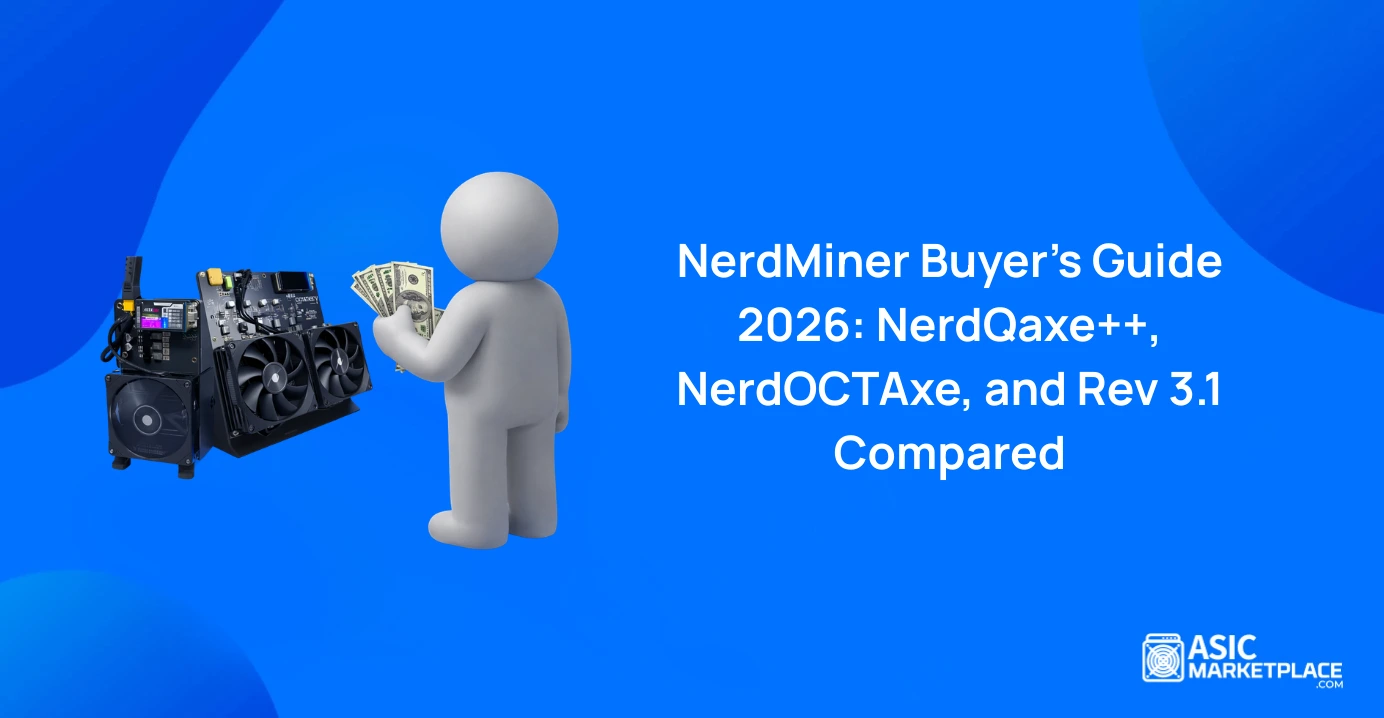
La NerdOCTAxe Rev 3.1 está diseñado como un minero de bitcoins de pequeño tamaño con el que se puede vivir. Es compacto (mide unos 25-30 cm de largo y pesa menos de 2 kg, según el proveedor), está construido con 8 chips BM1370 y utiliza dos ventiladores con refrigeración por aire.
Cómo es y cómo se siente
- Chasis metálico rectangular con orificios de ventilación
- Dos pequeños ventiladores en un extremo, entrada en el otro
- Entrada de alimentación estándar y puerto de red en la parte trasera (algunos lotes añaden Wi-Fi)
- Es más un “miniservidor” que un minero de bastidor completo.
El ruido es lo que más destaca. Los vendedores citan alrededor de 40 dB, que está muy por debajo de las típicas unidades ASIC que se sitúan en el rango de 70-80 dB. En una habitación normal, esto lo clasifica como un minero de bitcoins silencioso e incluso como un minero de bitcoins poco ruidoso, aunque seguirás oyendo el flujo de aire si la habitación está en silencio.
Por su tamaño y consumo, cumple varios requisitos:
- Funciona bien como minero casero en un estudio o habitación libre.
- Parece más un router de gama alta que un horno.
- La salida de calor (240 W) es similar a la de un PC de juegos con una carga moderada, por lo que puedes utilizarlo como un pequeño calefactor en invierno.
Para muchos usuarios, el objetivo es un minero de criptomonedas silencioso. Aunque “silencioso” es un poco exagerado, la especificación de 40 dB es lo suficientemente baja como para que, con algo de ruido de fondo, se acerque a un minero de bitcoins de pocos vatios que se funde con el entorno en lugar de dominarlo.
Como se basa en el algoritmo SHA-256, entra dentro del grupo sha-256 grupo de mineros domésticos: lo suficientemente eficiente para el hogar, sigue siendo un hardware serio, pero adaptado a las personas que quieren exponerse a la minería sin llenar un garaje con bastidores. NerdMiner lo comercializa como un nerdminer asic miner tanto para aficionados como para pequeños beneficios.
Si desea un minero de bitcoin de escritorio simple que no abrume visualmente su configuración, el NerdOCTAxe Rev 3.1 alcanza ese punto dulce, y esta revisión nerdminer nerdoctaxe seguirá volviendo a lo “habitable” que es el diseño durante meses de operación 24/7.
Tabla de especificaciones y su significado en la vida real
Pongamos las especificaciones de nerdoctaxe rev 3.1 en una tabla clara y luego traduzcámoslas a la experiencia cotidiana.
Especificaciones básicas
| Característica | Valor |
| Fabricante | NerdMiner |
| Modelo | NerdOCTAxe Rev 3.1 (12Th) |
| Algoritmo | SHA-256 (Bitcoin, BCH, etc.) |
| Tasa de hash | 12 TH/s |
| Consumo de energía | 240 W |
| Eficacia | ~20 J/TH |
| Recuento / tipo de chip | 8 × BM1370 |
| Nivel de ruido | ~40 dB |
| Refrigeración | Ventilador doble refrigerado por aire |
| Interfaz - Ethernet | Ethernet (algunos listados muestran Wi-Fi) |
| Voltaje | 100-220 V CA (entrada estándar PSU) |
| Rango de temperatura sugerido | 0-40 °C |
| Ventana de inicio | Alrededor de enero de 2026 |
En términos de categoría, esto es:
- Un minero de bitcoin de menos de 300w (con un amplio margen)
- Es un minero de bitcoin por debajo de $600 según los listados de revendedores alrededor de $650 menos descuentos y promos
- Mejor descrito como minero de bitcoin doméstico económico para gente que quiere eficiencia moderna en un armazón compacto, no hashrate industrial
Sigue siendo un minero de bitcoin de baja potencia cuando comparas 240W con los equipos de varios kilovatios utilizados por las granjas. Sin embargo, con 12 TH/s va muy por delante de los pequeños gadgets USB y mineros de juguete, dándote suficiente hashrate para apuntar significativamente a un pool o para funcionar como minero de bitcoin en solitario con niveles de hash de “un buen billete de lotería”.
En el contexto de nerdminer nerdoctaxe rev 3.1 12th 240w, la cifra de eficiencia de ~20 J/TH lo mantiene en línea con algún hardware de grado de centro de datos más antiguo, pero envuelto en un chasis de minero de bitcoin mini. Esa es una razón por la que muchos aficionados lo consideran entre los contendientes para el mejor mini minero bitcoin en la clase doméstica.
Debido a esta eficiencia y bajo consumo de vatios, también encaja bien en entornos donde la energía es limitada, como apartamentos u oficinas pequeñas, donde un minero bitcoin para la minería de apartamentos tiene que ser a la vez un minero bitcoin de bajo consumo de vatios y un minero bitcoin amigable para apartamentos que no dispare los interruptores o moleste a los vecinos.
Configuración: de la caja al hashrate (paso a paso)
Obtener el NerdOCTAxe de minería es un proceso sencillo, y aquí es donde brilla como un mejor minero bitcoin para principiantes candidato. A continuación te ofrecemos un método práctico y detallado que te servirá tanto si quieres trabajar en solitario como si quieres unirte a un grupo.
Paso 1 - Elija dónde vivirá
- Elige un lugar ventilado con un poco de corriente de aire.
- Deje espacio en los extremos de admisión y escape.
- Para su uso en apartamentos, trátalo como un PC pequeño: una estantería, debajo de un escritorio o cerca de una ventana está bien.
Aquí es donde la etiqueta de “minero de bitcoin apto para apartamentos” tiene sentido: 240 W de calor y ~40 dB de ruido son mucho más fáciles de manejar que un ASIC a gran escala.
Paso 2 - Alimentación y red
La mayoría de las unidades se envían con un PSU o utilizan un cable de CA estándar:
- Enchufa la alimentación a una regleta protegida contra sobretensiones.
- Conecta Ethernet a tu router o switch.
Algunos vendedores incluyen soporte Wi-Fi, lo que te permite tratarlo como un minero de bitcoin wifi si careces de conexiones Ethernet de repuesto, aunque el cable siempre es más estable para el hardware de larga duración.
Paso 3 - Acceder al panel de control
Patrones comunes:
- Utiliza la lista de dispositivos de tu router para encontrar la dirección IP del minero.
- Abre esa IP en tu navegador para acceder a la interfaz web.
- Las credenciales por defecto figuran en una pegatina o en la hoja de inicio rápido.
Dentro de la interfaz, configurarás:
- Pool URL o punto final de minería en solitario
- Dirección de la cartera
- Nombre y contraseña del trabajador
Aquí es donde decides si tu minero casero nerdminer actuará como un minero de bitcoin en solitario “caja de ”lotería" o un contribuyente constante a los pagos de la quiniela.
Paso 4 - Añadir ajustes de pool o solo
Para la minería en pool (que se explica en detalle más adelante), elige un pool SHA-256 e introduce la URL del pool y tu dirección BTC. Para la minería en solitario, puedes apuntar a una infraestructura como CKpool que ofrece semántica en solitario sin que tengas que ejecutar un nodo completo.
Una vez que se pulsa aplicar, los ventiladores suben un poco, el hashrate se asienta, y tu nerdminer asic miner empieza a ganar shares. A partir de aquí, lo realmente divertido de la configuración casera de nerdminer nerdoctaxe es observar las estadísticas: temperatura, hashrate y participaciones aceptadas.
Recompensas mineras, rentabilidad real y expectativas
Hablemos de la parte que le importa a todo el mundo: la rentabilidad de nerdoctaxe rev 3.1.
Contexto de la red
- Recompensa actual por bloque: 3,125 BTC por bloque.
- Dificultad: en torno a los 100T y con tendencia al alza.
- Precio del BTC : aproximadamente $68,700 por BTC.
La calculadora de CoinWarz, usando un minero de 390T como ejemplo, muestra alrededor de 0.00019479 BTC/día con la configuración de fábrica. A escala reducida, un minero de bitcoin doméstico de 12Th/s como el NerdOCTAxe Rev 3.1 aterriza alrededor:
- ~0,000006 BTC/día
- Alrededor de $0,41/día en ingresos brutos al precio anterior
El consumo es de 240 W, por lo que en 24 horas consumes 5,76 kWh al día. Depende de tu tarifa eléctrica:
- A $0,05/kWh → coste de ~$0,29/día → pequeño margen positivo
- A $0,10/kWh → coste ~$0,58/día → aproximadamente -$0,16/día, lo que coincide con la estimación de rentabilidad de BT-Miners.
- A $0,20/kWh → ~$1,15/día de coste → pérdida diaria más profunda
Así que si lo preguntas, “es rentable un minero 12 de 240w”, la respuesta honesta es:
- Con energía muy barata o subvencionada, o si el precio del BTC sube, puede acabar siendo ligeramente positivo.
- Con tarifas domésticas normales, suele alcanzar el umbral de rentabilidad en el mejor de los casos y, a menudo, una pequeña pérdida diaria.
Por eso el NerdOCTAxe encaja mejor como minero de lotería bitcoin. Apuntas a la infraestructura en solitario y aceptas que los ingresos regulares son mínimos, pero tienes una pequeña posibilidad de conseguir un bloque completo. Hay ejemplos reales de mineros de baja tasa de hash que consiguen un bloque completo: un minero aficionado de 6 TH/s consiguió una vez un pago de bloque completo por valor de unos $270k a través de CKpool, a pesar de las probabilidades de uno entre cientos de millones.
Si tu pregunta principal es “¿cuánto bitcoin puede ganar un minero 12?”, la visión sobria es: un modesto chorrito de saturación más un billete de lotería. Eso lo convierte en un buen minero de bitcoin doméstico para alguien que quiera iniciarse en la tecnología minera sin comprometerse con megavatios de equipo, pero una mala elección si tu único objetivo es un estricto retorno de la inversión con los precios normales de la electricidad doméstica.
Solo vs pool: cómo apuntar 12 TH/s para obtener el mejor efecto
El NerdOCTAxe se promociona fuertemente como un minero en solitario, y la historia del nerdminer nerdoctaxe minero en solitario es una gran parte de su atractivo.
Minería en solitario: pura lotería
Cuando haces minería en solitario, tu minero sha-256 habla con la red Bitcoin (normalmente a través de algo como CKpool). A 12 TH/s, tu parte del hash total de la red es microscópica, pero si consigues un bloque, obtienes los 3,125 BTC completos (menos comisiones menores).
Ventajas:
- Recompensa de bloque completo si cae un rayo
- Contabilidad más sencilla: grandes pagos poco frecuentes en lugar de goteos constantes.
- Encaja en el sueño del “minero solitario de bitcoin divertido”.
Contras:
- Puede que nunca llegues a un bloqueo
- Los ingresos son muy inestables
- Mejor verlo como un hobby o un experimento
Aquí es donde la gente pregunta, “¿es posible un minero de bitcoin silencioso” que aún pueda apuntar a la minería en solitario? El NerdOCTAxe dice que sí: tienes ventiladores silenciosos, calor modesto, y todavía puedes sentir que estás participando en la seguridad de la red desde tu escritorio.
Pool mining: saturación constante
Con nerdminer nerdoctaxe pool minero, apuntas el minero a una piscina tradicional:
- Usted envía acciones
- Ganas recompensas proporcionales
- Recibes pagos diarios o incluso por horas
Con 12 TH/s, sus ganancias son pequeñas pero predecibles. Convierte la unidad en un minero de bitcoin wifi más clásico o en un equipo Ethernet que ayuda a compensar algunos costes de energía mientras observas los cuadros de mando.
Enfoque híbrido
Muchos propietarios cambian de un modo a otro:
- Minería en solitario durante las divertidas “temporadas de lotería”
- Minería en común cuando se quieren pagos pequeños pero regulares
Si tu pregunta principal es “¿puedes minar bitcoin en casa con nerdminer?”, la respuesta es sí, tanto en modo solitario como pooled. Siempre y cuando sepas que este eficiente minero de bitcoin busca más la implicación y el aprendizaje que el puro beneficio, la experiencia puede ser muy satisfactoria.
En ese sentido, la minería en solitario nerdminer nerdoctaxe más el cambio ocasional de pool es el patrón que te da tanto la emoción de una posible gran victoria como la calma de algunas saturaciones regulares.
Vida cotidiana: ruido, calor y uso del apartamento
Una gran parte de esta revisión nerdminer nerdoctaxe es acerca de cómo se siente al vivir con la unidad.
Perfil de ruido
Con alrededor de 40 dB, el NerdOCTAxe se comporta como un minero de bitcoin de bajo ruido. Es claramente más silencioso que los antiguos ASIC de centro de datos de gama media, e incluso que algunos ordenadores de sobremesa para juegos.
- En una oficina doméstica con otros equipos zumbando, se integra.
- En un dormitorio silencioso, lo oirás, así que es mejor en un pasillo o una habitación libre.
Por eso muchos lo llaman minero de bitcoins silencioso y minero de criptomonedas silencioso en términos prácticos, aunque “silencioso” no sea literalmente exacto.
Calor y colocación
Con 240 W de calor, calienta el área inmediata:
- En invierno, eso puede ser una ventaja.
- En verano, puede ser conveniente tener cerca un ventilador o una ventana abierta.
Debido a que es sólo 240W, todavía cuenta como un minero bitcoin de bajo vatio y un minero bitcoin eficiente en la categoría mini-ASIC. No compite con los mineros “calentadores de espacio” que utilizan más de 1 kW, sino que se sitúa en un cómodo término medio.
Uso en apartamentos y espacios reducidos
Aquí es donde realmente se califica como un minero de bitcoin amigable con el apartamento:
- La toma de pared estándar está bien.
- No necesita cableado especial.
- El ruido está suficientemente contenido para la mayoría de los tipos de edificios.
Puedes tratarlo como otros electrodomésticos de tu casa:
- Manténgalo alejado de superficies blandas para que las rejillas de ventilación permanezcan despejadas.
- Dale un respiro detrás de un sofá o debajo de un escritorio.
Muchos usuarios interesados en el mejor minero de bitcoin para la minería de apartamentos terminan preseleccionando el NerdOCTAxe porque se mantiene por debajo del rango de 300W sin dejar de entregar 12 TH/s, que es más que muchos mini mineros anteriores. Mientras las expectativas de ingresos sean realistas, se comporta más como un gadget tecnológico que como un aparato industrial.
Para los hogares que quieren un minero de bitcoin en casa, pero no una caja ruidosa que se apodera de la sala de estar, este minero de bitcoin de factor de forma pequeño encaja muy bien en ese papel.
Comparación del NerdOCTAxe Rev 3.1 con otros mineros en miniatura
La discusión nerdminer nerdoctaxe vs mini bitcoin miners está completa sin compararla con hardware similar.
Tabla comparativa (nivel de especificaciones)
| Miner | Tasa de hash | Potencia | Eficiencia (aprox.) | ruido | Papel |
| NerdOCTAxe Rev 3.1 | 12 TH/s | 240W | ~20 J/TH | ~40 dB | Inicio / solo / piscina mini-ASIC |
| NerdQaxe++ Hydro | 4,8 TH/s | 76W | ~16-18 J/TH | ~40 dB | Mini refrigerado por agua de muy baja potencia |
| Bitaxe Supra Hex 701 | 4,2 TH/s | ~80W | ~21 J/TH | ~35 dB | Minero de tablero compacto para entusiastas |
| Antiguas placas USB/MCU nerdminer | <1 MH/s | <10W | N/A | Muy bajo | Puro aprendizaje, casi sin ganancias |
Esto muestra donde aterriza nerdminer nerdoctaxe vs nerdqaxe++:
- NerdQaxe++ ahorra más energía y es más frío, pero tiene menos de la mitad de hashrate.
- NerdOCTAxe utiliza más energía (aún baja para los estándares ASIC) y ofrece más del doble de hashrate.
Para las personas que intentan decidir qué minero de bitcoin es mejor para su hogar, la disyuntiva es simple:
- Si tu prioridad es el menor consumo de energía posible, las unidades tipo NerdQaxe ganan.
- Si desea más hashrate en un cuerpo aún compacto, el NerdOCTAxe Rev 3.1 es un caso fuerte como contendiente para el mejor minero bitcoin de baja potencia para principiantes.
En términos de precio, el NerdOCTAxe alrededor de $650 se encuentra en el lado más alto del mercado de pequeños mineros, pero todavía califica como un minero bitcoin por debajo de $600 después de descuentos y ofertas regionales. Eso lo hace atractivo para la gente que quiere un minero nerdminer asic un poco más serio en lugar de sólo un juguete de exhibición.
Desde una perspectiva doméstica, la combinación de 12 TH/s, 240W y ~40 dB de ruido lo ayuda a competir fuertemente en la conversación sobre el mejor minero de bitcoin doméstico 2026, especialmente entre aquellos que quieren un minero de bitcoin mini amigable para el banco de trabajo en lugar de un equipo de rack completo.
Cuando se mira ampliamente en nerdminer nerdoctaxe vs mini bitcoin mineros, esta unidad es la que usted elija si usted está bien con un poco más de consumo de energía para obtener un aumento significativo en hashrate sin dejar de ser en la “caja tranquila en un estante” categoría.
¿Quién debe comprarlo y quién no?
Entonces, ¿merece la pena el nerdminer nerdoctaxe rev 3.1? La respuesta depende totalmente de tus objetivos.
Ideal para:
- Aficionados que quieren un minero casero "nerdminer" que sea plug-and-play.
- Usuarios aficionados a la tecnología que quieren ver el hashrate y los pagos en tiempo real.
- Personas que disfrutan con la idea de un minero de lotería de bitcoins zumbando de fondo.
- Los principiantes quieren un minero bitcoin que se sienta como un hardware serio en lugar de un juguete.
Estos usuarios aprecian el hecho de que el NerdOCTAxe es un minero de bitcoin de baja potencia con una buena eficiencia, un funcionamiento silencioso y un factor de forma adecuado para escritorios y estanterías.
No es ideal para:
- Alguien que busca el mejor minero bitcoin absoluto para la minería de apartamentos en términos de ingresos; 12 TH/s sigue siendo pequeño en comparación con los grandes equipos.
- Cualquiera cuyo coste de energía sea muy elevado; en ese caso, nerdoctaxe rev 3.1 rentabilidad será probablemente negativa la mayoría de los meses.
- Usuarios a los que sólo les importa el ROI y no les interesa aprender o participar en la red como hobby.
Si se pregunta: “mejor minero bitcoin de baja potencia para principiantes”, el NerdOCTAxe Rev 3.1 cumple con la mayoría de los requisitos, especialmente dada su combinación de eficiencia de minero bitcoin de 240w y pequeño tamaño. También tiene sentido como un minero de bitcoin doméstico económico para hogares que están bien con ganancias netas pequeñas o nulas, pero que les gusta la tecnología y la idea.
Para los estrictos amantes de los números, la pregunta “¿es rentable un minero 12 de 240w?” se responde básicamente con las matemáticas anteriores: depende del precio de la electricidad y de la evolución del precio del BTC. Si esas variables son favorables, se acerca al punto de equilibrio o a un ligero beneficio; si no, considéralo un pasatiempo de pago que de vez en cuando te envía saturaciones.
En resumen: para el perfil de comprador adecuado, es fácil ver por qué la gente lo incluye en las listas de “mejor minero casero de bitcoin 2026”. Para los mineros puramente industriales, es más un juguete, aunque bastante capaz.
Consejos prácticos de puesta a punto, piscinas y rutina diaria
Una vez que su NerdOCTAxe esté funcionando, la mayor parte de su interacción será revisar las estadísticas y ocasionalmente cambiar de pools.
Consejos de ajuste y uso
- Estrategia energética
- Si tu potencia es superior a $0,10/kWh, trátalo como un hobby, no como un motor de beneficios.
- Considera la posibilidad de hacerla funcionar más en los meses más fríos, cuando el calor es útil.
- Refrigeración
- Asegúrese de que las rejillas de ventilación no tengan polvo.
- Un pequeño ventilador externo puede ayudar a mantener el aire de admisión frío, lo que ayuda a mantener un 12 TH/s constante.
- Red
- Ethernet es ideal, pero las unidades modernas comercializadas como mineros bitcoin wifi están bien con señales fuertes.
- Supervise las caídas de conexión, ya que afectan directamente al envío de acciones.
Rutina en solitario o en grupo
Un patrón común para la minería nerdminer nerdoctaxe piscina es:
- Elija una quiniela de confianza con sistemas de pago justos.
- Añade la configuración de tus trabajadores en la interfaz web.
- Vea cómo los pagos diarios se acumulan en su cartera.
Cuando te apetezca dar un gran golpe, puedes volver al modo de minería en solitario nerdminer nerdoctaxe, apuntando a un punto final de infraestructura en solitario y aceptando que pueden pasar días sin recibir ningún pago, y de repente tu minero casero nerdminer puede encontrar oro.
Para los principiantes, aquí es donde la unidad se dobla como un minero bitcoin mejor principiante y un minero bitcoin wifi o unidad Ethernet que te enseña cómo funcionan los pools de minería, cómo la latencia afecta a las acciones, y cómo el hash y la dificultad se relacionan. Hace esto sin dejar de ser un minero bitcoin de baja potencia, por lo que los errores no son salvajemente caros.
Lista de control diaria
- Un vistazo al hashrate: ¿cerca de 12 TH/s?
- Compruebe la temperatura: ¿dentro de las especificaciones y estable?
- Mira el cuadro de mandos del fondo: ¿acciones aceptadas y pagos constantes?
Manejado de esta manera, el NerdOCTAxe se convierte en un confiable nerdminer asic miner que usted puede “configurar y vigilar” en lugar de una constante niñera manual.
Coste de la energía, cálculo del rendimiento de la inversión y escenarios realistas de amortización
Una de las formas más prácticas de juzgar este minero es comparar los cálculos de potencia con los precios reales. El consumo nominal es de 240W. Durante 24 horas:
- 240 W = 0,24 kW
- 0,24 kW × 24 horas = 5,76 kWh al día
Según el cálculo anterior, los ingresos diarios al precio y dificultad actuales rondaban los $0,41 al día antes de los costes de electricidad. He aquí cómo se ve con diferentes tarifas eléctricas:
| Precio de la electricidad ($/kWh) | Coste energético diario | Resultado neto diario | Resultado neto a 30 días |
| $0.05 | ≈ $0.29 | ≈ +$0.12 | ≈ +$3.60 |
| $0.10 | ≈ $0.58 | ≈ -$0.17 | ≈ -$5.10 |
| $0.15 | ≈ $0.86 | ≈ -$0.45 | ≈ -$13.50 |
| $0.20 | ≈ $1.15 | ≈ -$0.74 | ≈ -$22.20 |
Puedes introducir tu propia tarifa:
Coste energético diario = 5,76 × (su precio por kWh)
Algunas conclusiones:
- La energía barata o subvencionada (en torno a cinco céntimos por kWh) ofrece una escasa rentabilidad positiva.
- Los precios normales de la vivienda, entre diez y veinte céntimos, suelen suponer una pequeña pérdida mensual.
- Si tratas la calefacción como un extra en invierno, el coste efectivo baja un poco porque compensas algo de calefacción.
El objetivo principal de este dispositivo debería ser el aprendizaje, el uso como hobby y el apilamiento a largo plazo, no las carreras de hojas de cálculo. Si alguna vez cae un bloque mientras estás minando en solitario, empequeñecerá cualquier coste de energía que hayas pagado hasta ahora. Si no es así, adquirirás habilidades prácticas con monederos, pools, firmware y ajuste de hardware en una máquina real pero de bajo consumo.
Ejemplos de instalaciones domésticas, gestión del ruido y consejos de seguridad
Para cerrar la brecha entre la teoría y el uso cotidiano, es útil imaginar configuraciones reales y algunas buenas prácticas básicas para hacer funcionar este minero en casa.
Configuraciones domésticas habituales
- Equipo de oficina en casa
- Se coloca en un estante cerca del router.
- Cable Ethernet directamente en el router o switch.
- Genial si ya tienes un pequeño ventilador o aire acondicionado en esa habitación.
- Rincón del salón
- En un pequeño estante metálico o mesa auxiliar.
- Detrás del sofá o del soporte del televisor, con al menos 20-30 cm libres detrás del lado del escape.
- El ruido se mezcla con el de la televisión o el sonido general de la habitación.
- Pasillo o trastero
- Buen lugar si quieres el sonido lo más lejos posible de las habitaciones.
- Mantenga los conductos despejados y no obstruya las rejillas de ventilación con cajas o ropa.
Trucos sobre ruido y calor
- Colócalo sobre una superficie sólida, no directamente sobre un escritorio hueco que pueda vibrar.
- Unos pequeños pies de goma o una almohadilla de espuma (dejando libre el flujo de aire) pueden reducir el zumbido de las vibraciones.
- Si la habitación está caliente, un simple ventilador de pie que aleje el aire caliente del minero ayuda mucho.
Consejos básicos de seguridad
- Utiliza un buen protector contra sobretensiones o un SAI si tu zona tiene un suministro eléctrico inestable.
- Mantén los cables ordenados para que nadie tropiece y tire el minador de una estantería.
- No cubra las rejillas de ventilación con filtros de tela, papel o polvo que bloqueen el aire.
- Aspire suavemente la zona de admisión y escape cada pocas semanas para reducir la acumulación de polvo.
Control rutinario
- Comprueba el hashrate una vez al día: si cae muy por debajo de 12 TH/s, algo va mal.
- Vigila la temperatura en el panel web; los saltos grandes suelen significar un conducto de ventilación bloqueado o una habitación caliente.
- Revise semanalmente las estadísticas del pool o del solo para confirmar que sigue recibiendo participaciones y pagos.
De esta forma, el minero actúa como un pequeño electrodoméstico siempre encendido. Calienta parte de tu casa, zumba silenciosamente en segundo plano y te ofrece una ventana en vivo y en directo a la minería de bitcoins sin saturar tu panel eléctrico, tus oídos o tu espacio.
Conclusión
El NerdMiner NerdOCTAxe Rev 3.1 es una máquina pequeña y seria para gente que quiere minar en casa sin convertir su lugar en una sala de servidores. Con 12 TH/s a sólo 240W, funciona bien como un minero bitcoin de baja potencia que puede ejecutar en un estudio, rincón de dormitorio o pequeña oficina.
No va a sustituir a un gran equipo de granja, pero da hashrate real, bajo ruido, y una forma sencilla de aprender tanto en solitario y la minería de la piscina. Si ves la minería como una mezcla de hobby, educación y apilamiento de bitcoins a largo plazo, esta caja tiene sentido.
Para los lectores dispuestos a hacerse con una unidad, la compra a través de Mercado Asic le ofrece una forma sencilla de obtener hardware NerdOCTAxe genuino de una tienda especializada en equipos ASIC para mineros domésticos y a pequeña escala. Establezca expectativas realistas sobre los beneficios, trátelo como un proyecto divertido y lo disfrutará.
Preguntas frecuentes
-
¿Se puede minar Bitcoin en casa con un NerdMiner?
Sí, puede minar Bitcoin en casa con el NerdMiner NerdOCTAxe, ya que está diseñado para uso doméstico con bajo consumo de energía y mínimo ruido. Sin embargo, la rentabilidad dependerá de tus tarifas eléctricas y de la dificultad actual del Bitcoin.
-
¿Cuánto puede ganar un minero de 12 Bitcoin?
Un minero de 12 TH/s como el NerdMiner NerdOCTAxe puede ganar unos 0,000006 BTC al día de media, según la dificultad Bitcoin actual y las condiciones del mercado. Las ganancias son bajas, pero la minería en solitario ofrece la posibilidad de obtener grandes y escasas ganancias.
-
¿Es el NerdMiner bueno para principiantes?
Sí, el NerdMiner NerdOCTAxe es una excelente opción para principiantes debido a su bajo consumo de energía, funcionamiento silencioso y configuración sencilla. Proporciona experiencia práctica con la minería a la vez que es rentable para los que acaban de empezar.

Peter Davis
Peter Davis es un consumado analista de blockchain y redactor técnico con más de cuatro años de experiencia en el sector de las criptomonedas. Su experiencia abarca la infraestructura blockchain, el hardware de minería ASIC y los mercados de activos digitales, donde es reconocido por traducir conceptos técnicos complejos en análisis precisos, perspicaces y accesibles para una audiencia global.
Con una sólida base en investigación técnica y evaluación de mercados, el trabajo de Peter se centra en vincular la innovación de blockchain con estrategias prácticas de minería e inversión. Sus escritos se caracterizan por la profundidad analítica, la claridad y el enfoque en las perspectivas respaldadas por datos que guían tanto a profesionales como a entusiastas a través del cambiante panorama de las criptomonedas.
Impulsado por una profunda pasión por la tecnología Web3 y los sistemas descentralizados, Peter sigue produciendo contenidos de autoridad, basados en la investigación, que mejoran la comprensión del rendimiento de la minería ASIC, la eficiencia de blockchain y la dinámica más amplia que da forma al futuro de las finanzas digitales.


 Español