Bitcoin mining in 2026 isn’t the easy money game it was a few years back. Bitcoin trades near $66,000 after bouncing off a recent low of $59,130, and network difficulty just dropped over 10% to 124.93 trillion as weaker rigs went offline, a shift that means more BTC earned per unit of hashing power but also a wider gap between a smart purchase and a bad one. Choosing the right ASIC miner can help you achieve steady returns while using electricity more efficiently. Canaan built one of the first ever Bitcoin mining chips, and its Avalon lineup remains a real alternative to bigger names, spanning industrial machines pulling thousands of watts down to tiny home units that sit quietly on a desk.
This guide ranks the five current Canaan Avalon machines, the A16 XP, A16, Avalon Q, Mini 3, and Nano 3S, using hashrate, efficiency, and real profitability based on today’s Bitcoin price and difficulty, not guesswork. Every crypto miner right now is fighting the same battle of rising difficulty and tight margins, so we pulled specs straight from each listing and ran current numbers. Whether you’re building a serious setup or just curious about a six-terahash heater-shaped miner, this list covers specs, pricing, setup steps, and practical advice.
Why Canaan Avalon Still Matters in 2026?
Canaan Avalon isn’t exactly a newcomer running after a trend or something. The company made one of the very first purpose-built Bitcoin mining chips back in 2013, years before most of the hardware brands we see today even existed, and since then it has been polishing that chip design for more than a decade through tough cycles, high-spirited bull runs, and honestly brutal bear markets. You can feel that background in little but important details too, like steady firmware, thermal behavior that doesn’t randomly surprise you, and a supply chain that’s survived enough market swings to understand how to keep production fairly stable.
What makes the 2026 Avalon lineup stand apart from the earlier generations is that spread thing, it is kind of wide. Like, a few years ago, Canaan mostly was hanging out at the high end, going head to head with industrial-scale rigs from other makers. But now the catalog, it sort of stretches from a 300 TH/s flagship all the way down to this six-terahash unit that can basically sit on a desk and also pretend to be a quiet space heater during winter.
That range is important because it means beginners and veterans can both step into the same brand ecosystem. Same warranty structure and the same support, instead of having to learn a whole different set of quirks later on if they decide to scale up.
It’s also worth noting that every model in this lineup runs the same SHA-256 algorithm and mines the same coin: Bitcoin. There’s no confusion about compatibility or pool support across the five machines, which simplifies things considerably if you’re planning to run more than one model side by side, say, a flagship unit for serious output paired with a smaller home machine for tinkering and learning.
How Do You Compare Canaan Avalon Miners?
Ranking mining hardware isn’t as simple as “biggest hashrate wins.” A machine that pulls in more Bitcoin per day but burns through power inefficiently can lose to a smaller, leaner unit once electricity bills come due. So we used a blended approach.
Here’s what we weighed for each model:
- Hashrate: Total computing power in terahashes per second (TH/s). This sets the ceiling on how much Bitcoin a machine can mine before costs are subtracted.
- Power efficiency: Measured in joules per terahash (J/TH). Lower is better, since it means less electricity is wasted per unit of work.
- Daily and monthly profitability: Estimated using the current Bitcoin price (~$66,000) and the current network difficulty (124.93 trillion), at a realistic electricity rate.
- Upfront cost and payback period: How long it takes the machine to earn back its purchase price under today’s conditions.
- Use case fit: Whether the machine makes more sense for a serious mining operation, a small side setup, or a hobby/home project.
We did not just plug in optimistic numbers and call it a day. Bitcoin mining margins are thin right now, and any blog that tells you every miner pays for itself in six months isn’t being straight with you. The rankings below reflect what these machines can realistically do in the current market, with notes on how things change if your electricity rate is higher or lower than average.
Is the Canaan Avalon A16 XP the Best Bitcoin Miner in 2026?
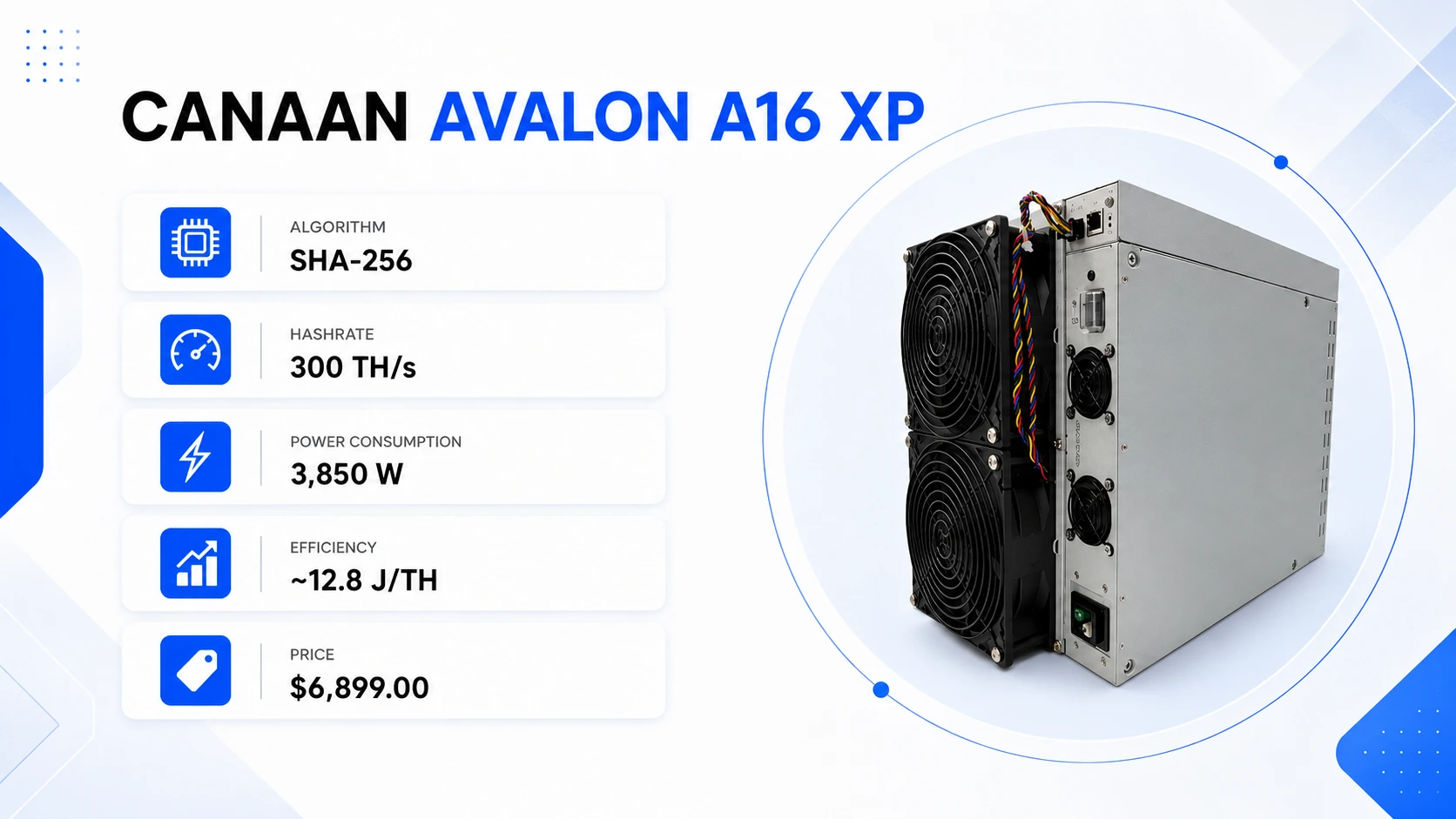
TheAvalon A16 XP takes the top spot, and it’s not particularly close. This is Canaan’s current flagship SHA-256 machine, and it delivers the best mix of raw power and efficiency in the entire lineup.
Specs at a Glance
| Specification | Detail |
| Hashrate | 300 TH/s |
| Power Consumption | 3,850 W |
| Efficiency | ~12.8 J/TH |
| Algorithm | SHA-256 (Bitcoin) |
| Net Weight | 14.9 kg |
| Dimensions (unit) | 366 x 213 x 300 mm |
| Voltage | 220–277V |
| Operating Temperature | -5°C to 35°C |
| Humidity Range | 10–90% |
| Price | $6,899.00 |
At 300 TH/s, the A16 XP pulls more hashing power than anything else in the Avalon catalog right now, and it does so while staying under 13 joules per terahash, which is a genuinely competitive efficiency number for 2026 hardware. That efficiency rating matters more than people think. A machine that produces a high hashrate but wastes power per terahash will lose ground every single month as your power bill eats into earnings.
This is built for serious setups, not a spare bedroom. It needs a 220–277V circuit, which is standard for industrial or container-based mining but not something you’ll find in a typical home outlet. It also runs hot and loud, so plan for a dedicated space with real airflow or active cooling, not a closet.
Where the A16 XP earns its top ranking is in math. At today’s Bitcoin price and difficulty, this machine produces more daily revenue than any other Avalon model, meaningfully, and because its efficiency is also the best in the lineup, more of that revenue survives after the power bill. If you’re running a mining operation at any real scale and you want a single machine that does the heavy lifting, this is the one to buy first.
Is the Canaan Avalon A16 Worth Buying Over the A16 XP?
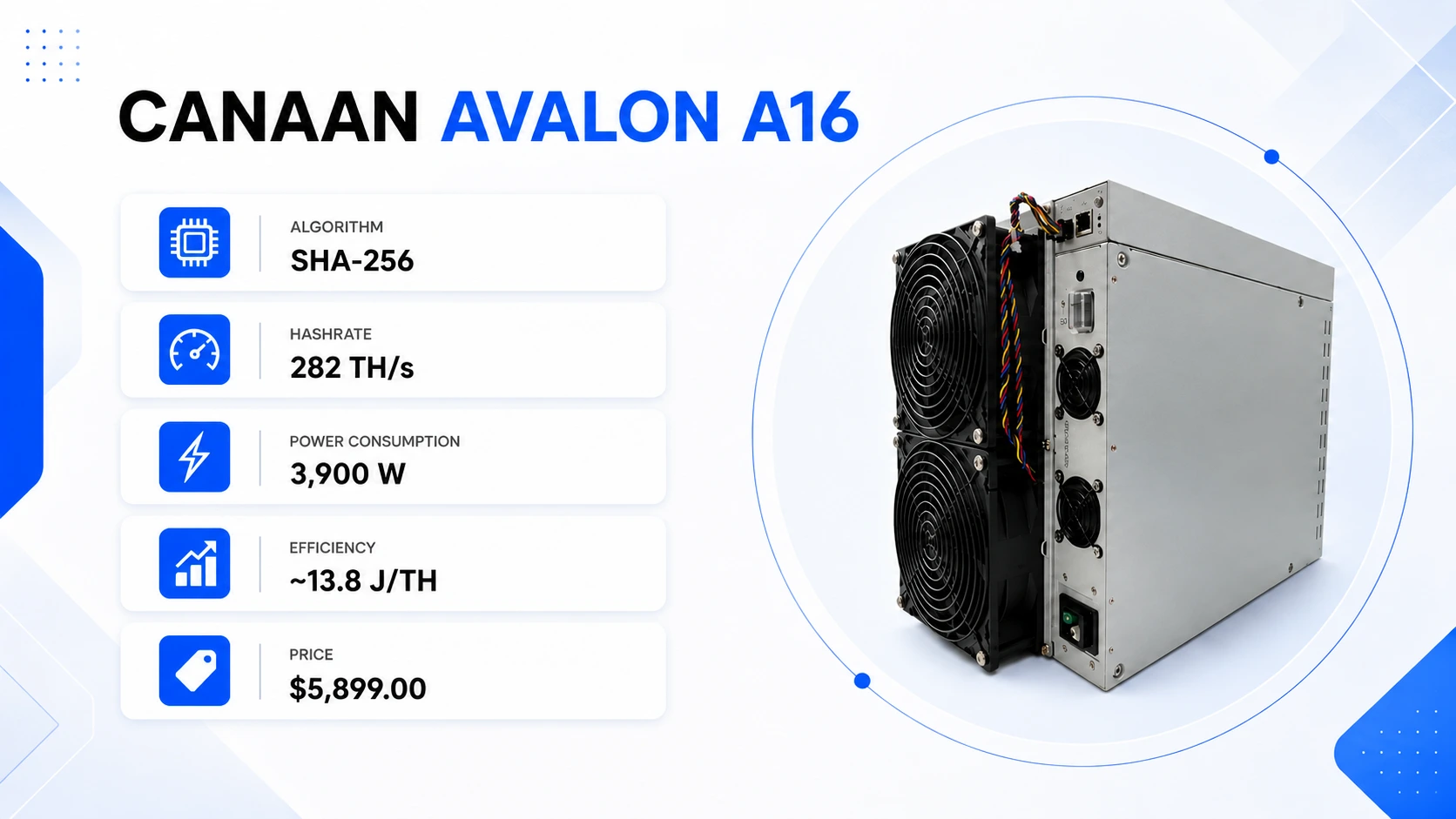
The Avalon A16 is the A16 XP’s sibling, and the gap between the two is smaller than the price difference might suggest. This one is still a serious, industrial-grade machine, just a notch below the XP version, in both hashrate and efficiency.
Specs at a Glance
| Specification | Detail |
| Hashrate | 282 TH/s |
| Power Consumption | 3,900 W |
| Efficiency | ~13.8 J/TH |
| Algorithm | SHA-256 (Bitcoin) |
| Net Weight | 14.9 kg |
| Dimensions (unit) | 366 x 213 x 300 mm |
| Voltage | 220–277V |
| Operating Temperature | -5°C to 35°C |
| Humidity Range | 10–90% |
| Price | $5,899.00 |
Here’s the interesting bit, the A16 actually ends up pulling a little more power (3,900W vs 3,850W) but at the same time it manages less hashrate (282 TH/s vs 300 TH/s) than its XP sibling. So overall, it’s sitting a step behind on efficiency, like around 13.8 J/TH compared with the XP’s 12.8 J/TH. On paper, it feels like a pretty obvious loss, but then the A16 is $1,000 cheaper, and that price gap does narrow down some of the profitability difference. Especially if you’re buying on a tight budget, then the math starts looking less harsh.
Physically, the two machines are almost identical twins, with the same chassis dimensions, the same weight, the same voltage requirements, and the same operating range, too. If you already mapped out your rack space or container layout around the A16 XP footprint, then the A16 just slides in nicely, no changes needed.
Who should buy the A16 instead of the XP? Anyone who wants flagship-class hashrate without the flagship price tag. The per-unit profitability is still strong, and if you’re scaling out a small farm and buying in bulk, the savings across multiple units add up fast. It lands at #2, not because it’s a weak machine; it’s genuinely a top-tier ASIC, but because the XP simply edges it out on every measurable metric except sticker price.
Is the Canaan Avalon Q Good for Home Bitcoin Mining?
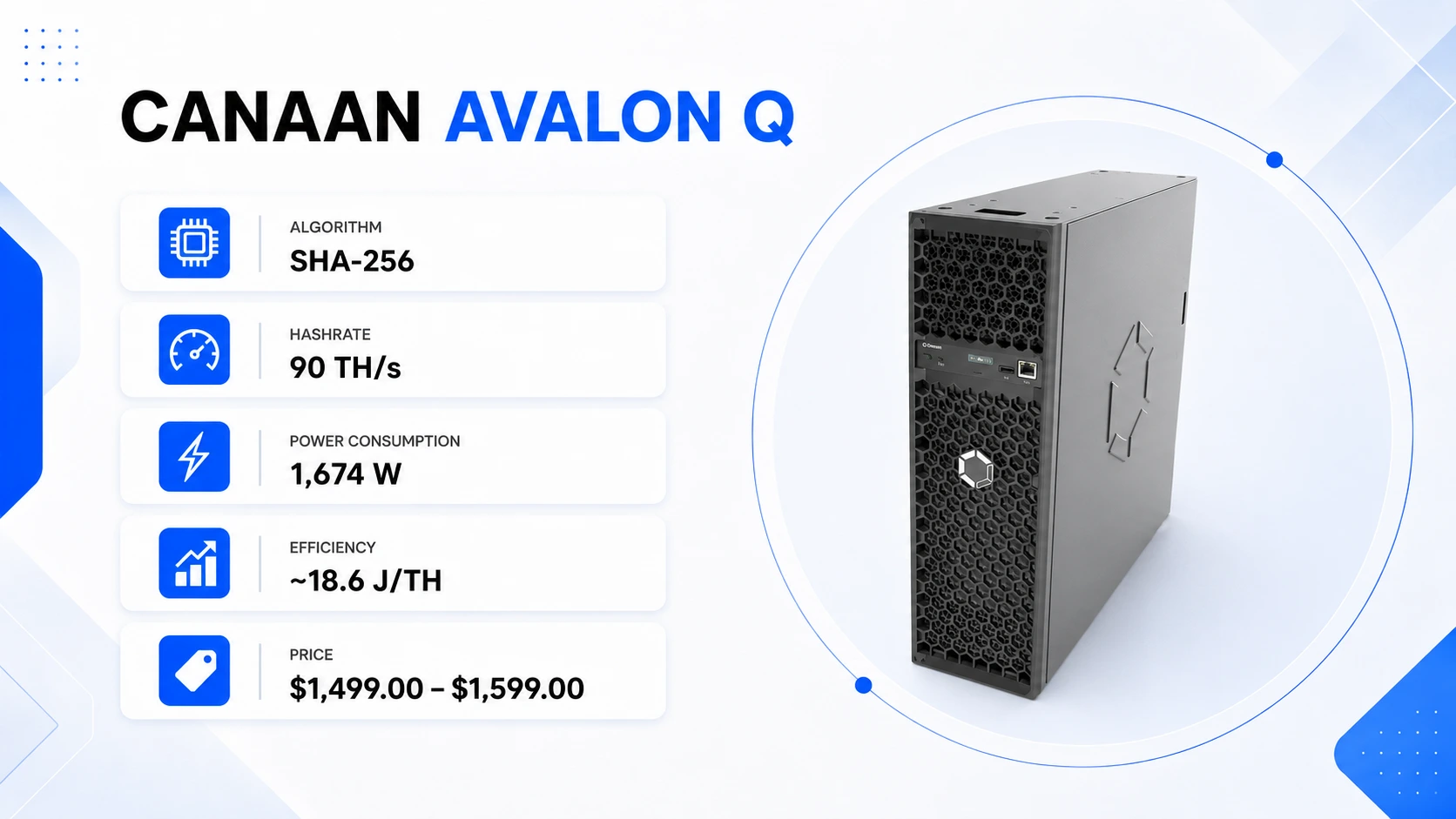
TheAvalon Q is where the Avalon lineup shifts gears. Released in April 2025, this is Canaan’s answer to the growing demand for a machine that bridges industrial-scale mining and home setups. It’s compact, quieter than the big rigs, and priced to be approachable.
Specs at a Glance
| Specification | Detail |
| Hashrate | 90 TH/s |
| Power Consumption | 1,674 W |
| Efficiency | ~18.6 J/TH |
| Algorithm | SHA-256 (Bitcoin) |
| Net Weight | 10.5 kg |
| Dimensions (unit) | 455 x 130 x 440 mm |
| Voltage | 110–240V |
| Noise Level | 65 dB |
| Operating Temperature | -5°C to 35°C |
| Warranty | 360 Days |
| Price | $1,499.00 – $1,599.00 |
This machine runs on standard 110–240V power, so in other words, it can plug into a normal home circuit in most countries, no electrician’s visit required. Since it’s under 1,700W, it draws what a pair of space heaters would, and that makes it a pretty believable choice for a garage, basement, or even a small mining closet that’s dedicated to it.
The efficiency number, around 18.6 J/TH, is noticeably behind the two flagship machines above it, which makes sense given the size and price difference. But for the price tag, it’s a strong number. The Avalon Q holds a 4.67 out of 5 customer rating across two dozen reviews, with buyers consistently mentioning fast shipping and smooth setup, which counts for something when you’re new to running mining hardware.
This model earns the #3 spot because it’s the most realistic entry point into genuinely meaningful mining output. It won’t out-earn the flagship machines in raw dollars, but its lower upfront cost and lower power draw make it far more approachable, and the payback timeline, while still measured in years rather than months in the current market, is more forgiving than people might expect for a sub-$1,600 machine.
Can You Mine Bitcoin at Home with the Canaan Avalon Mini 3?
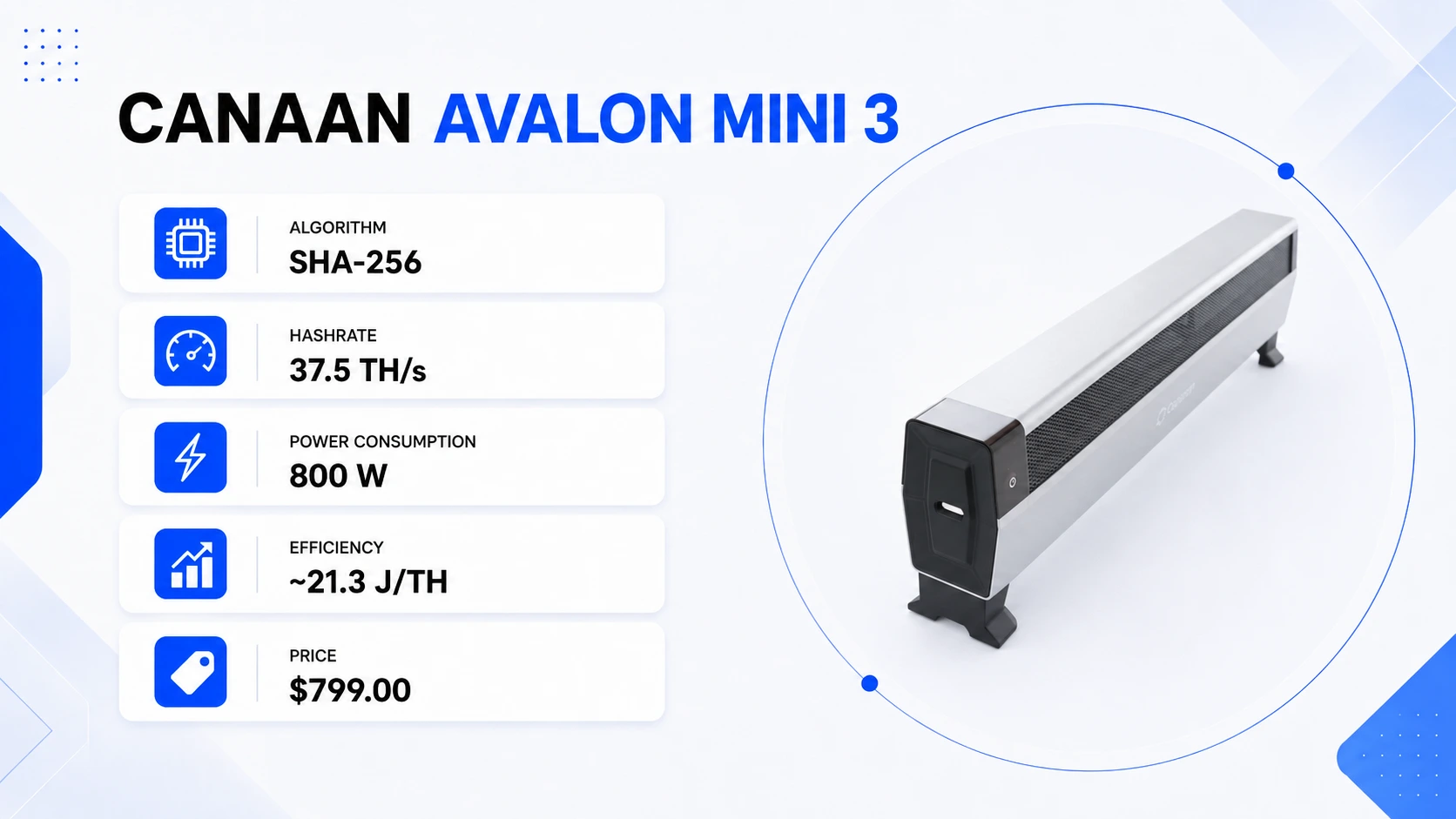
The Avalon Mini 3 is built specifically for folks who want to mine Bitcoin from home, without turning a room into a server closet or something like that. It got released in March 2025, and it sort of trades raw output for a setup that just fits into normal living spaces.
Specs at a Glance
| Specification | Detail |
| Hashrate | 37.5 TH/s |
| Power Consumption | 800 W |
| Efficiency | ~21.3 J/TH |
| Algorithm | SHA-256 (Bitcoin) |
| Net Weight | 8.35 kg |
| Dimensions (unit) | 760 x 104 x 214 mm |
| Voltage | 110–240V |
| Noise Level | 55 dB |
| Operating Temperature | -5°C to 40°C |
| Price | $799.00 |
At 800W, this miner basically drinks about the same power as a window air conditioning unit, and at 55 dB, it’s noticeably quieter than those industrial-class machines listed above. The whole noise level thing matters more than most folks think, especially when the device is sitting in a home instead of some warehouse. In a bunch of reviews, people keep pointing out the build quality and a smooth ordering flow, and this model lands at a 4.41 out of 5 rating.
That wider operating temperature range, up to 40°C, gives it a little more flexibility for warmer areas or spaces without dedicated cooling compared with several other models in this list. And where the Mini 3 ends up at #4, not any higher: its efficiency, around 21.3 J/TH, is basically the second-lowest in the group, plus its hashrate of 37.5 TH/s means the day-to-day output stays pretty modest. In today’s market, with electricity priced anywhere near average residential rates, this machine sits close to breakeven rather than generating strong profit.
It’s best understood as a learning tool and a low-stakes way to participate in mining, not as the centerpiece of a profit-focused operation. If your goal is steady passive income, look higher on this list. If your goal is to own and run a real Bitcoin mining rig at home for a manageable price, the Mini 3 does that job well.
Is the Canaan Avalon Nano 3S Worth It for Beginners?
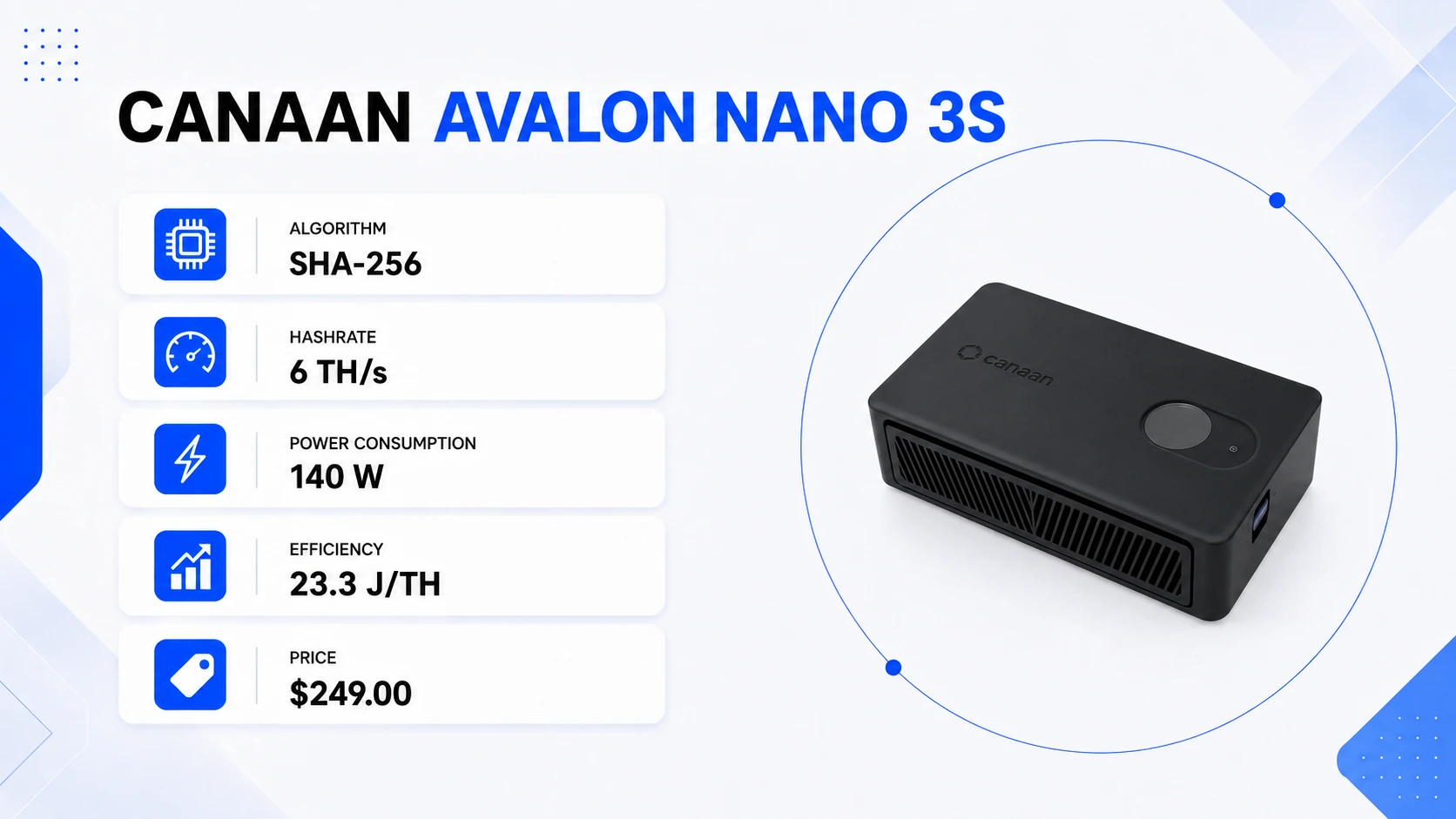
TheAvalon Nano 3S rounds out the list, and it’s a completely different animal from the four machines above it. Canaan markets this as a portable home miner, and it’s genuinely tiny, drawing just 140W, about the same as a couple of laptop chargers.
Specs at a Glance
| Specification | Detail |
| Hashrate | 6 TH/s |
| Power Consumption | 140 W |
| Efficiency | 23.3 J/TH |
| Algorithm | SHA-256 (Bitcoin) |
| Net Weight | 0.86 kg |
| Dimensions | 20.5 x 11.5 x 5.85 mm (compact unit) |
| Voltage | 28V |
| Noise Level | 33–40 dB |
| Operating Temperature | -5°C to 35°C |
| Price | $249.00 |
by a wide margin, the quietest and smallest machine on this list, and at 33–40 dB, it’s genuinely whisper quiet, closer to a refrigerator hum than anything resembling a mining rig. It’s also priced low enough that it’s an easy first purchase for someone who’s never owned mining hardware and wants to learn the basics without risking much money.
There’s no getting around the math here, though: at 6 TH/s, this device produces a tiny fraction of what the other four Avalon models generate, and its efficiency, while listed accurately at 23.3 J/TH, is the weakest in the lineup since smaller chips are inherently less efficient per terahash than larger industrial arrays. In the current market, the Nano 3S realistically functions more as an educational device, or a low-power way to keep a tiny stake in network participation, than as a profit machine. Some buyers run it more like a curiosity, similar to how people used to run novelty USB miners, just with real SHA-256 hardware behind it.
It earns the #5 spot honestly: it’s the most accessible Avalon model, and it does exactly what it claims, but it should be bought with realistic expectations about output, not as a primary income source.
How Do All Five Canaan Avalon Miners Compare in 2026?
Here’s everything stacked together so you can compare at a glance.
| Model | Hashrate | Power | Efficiency (J/TH) | Voltage | Noise | Price |
| Avalon A16 XP | 300 TH/s | 3,850 W | ~12.8 | 220–277V | High | $6,899.00 |
| Avalon A16 | 282 TH/s | 3,900 W | ~13.8 | 220–277V | High | $5,899.00 |
| Avalon Q | 90 TH/s | 1,674 W | ~18.6 | 110–240V | 65 dB | $1,499–$1,599 |
| Avalon Mini 3 | 37.5 TH/s | 800 W | ~21.3 | 110–240V | 55 dB | $799.00 |
| Avalon Nano 3S | 6 TH/s | 140 W | 23.3 | 28V | 33–40 dB | $249.00 |
A clear pattern shows up here: as hashrate goes up, efficiency improves, but so does the upfront cost and the power infrastructure you’ll need. There’s no universally “best” machine on this table, only the best machine for your specific setup, budget, and goals.
How Much Can You Make Mining Bitcoin with a Canaan Avalon in 2026?
This is the section most buyers actually care about, so let’s get specific. Bitcoin is currently trading around $66,000, and network difficulty sits at 124.93 trillion after a recent 10% downward adjustment. Using these numbers, here’s what each machine earns before and after electricity costs, calculated at $0.07 per kWh, a reasonable mid-range rate for many regions.
| Model | Est. Daily Revenue | Daily Power Cost ($0.07/kWh) | Est. Daily Net Profit | Est. Monthly Net |
| Avalon A16 XP | ~$9.90 | ~$6.47 | ~$3.43 | ~$103 |
| Avalon A16 | ~$9.31 | ~$6.55 | ~$2.75 | ~$83 |
| Avalon Q | ~$2.97 | ~$2.81 | ~$0.16 | ~$5 |
| Avalon Mini 3 | ~$1.24 | ~$1.34 | -$0.11 | -$3 |
| Avalon Nano 3S | ~$0.20 | ~$0.24 | -$0.04 | -$1 |
A few honest takeaways from this table:
- The two flagship machines, the A16 XP and A16, remain solidly profitable even at a moderate electricity rate, and they’re the only two models that comfortably outpace their power costs right now.
- The Avalon Q sits right at breakeven at $0.07/kWh. Drop your power cost to $0.05/kWh (common for industrial or off-peak rates), and its daily net profit jumps to roughly $0.96, which changes the picture considerably.
- The Mini 3 and Nano 3S run at a slight loss at this electricity rate. They become profitable, even if modestly, only with cheaper power around $0.04–$0.05/kWh, or if Bitcoin’s price climbs from here.
- The electricity rate is the single biggest variable in this whole equation. Before buying any miner on this list, find out your exact rate per kWh and redo this math with your real numbers.
Payback period matters just as much as monthly profit. At $0.07/kWh, the A16 XP needs roughly five and a half years to pay for itself based on today’s numbers alone, not accounting for any future Bitcoin price appreciation or difficulty changes, both of which historically move in the miner’s favor over multi-year periods. That’s a realistic, not pessimistic, number, and it’s exactly why accuracy matters more than hype when you’re deciding where to put your money.
How Do You Choose the Right ASIC Miner for Your Setup?
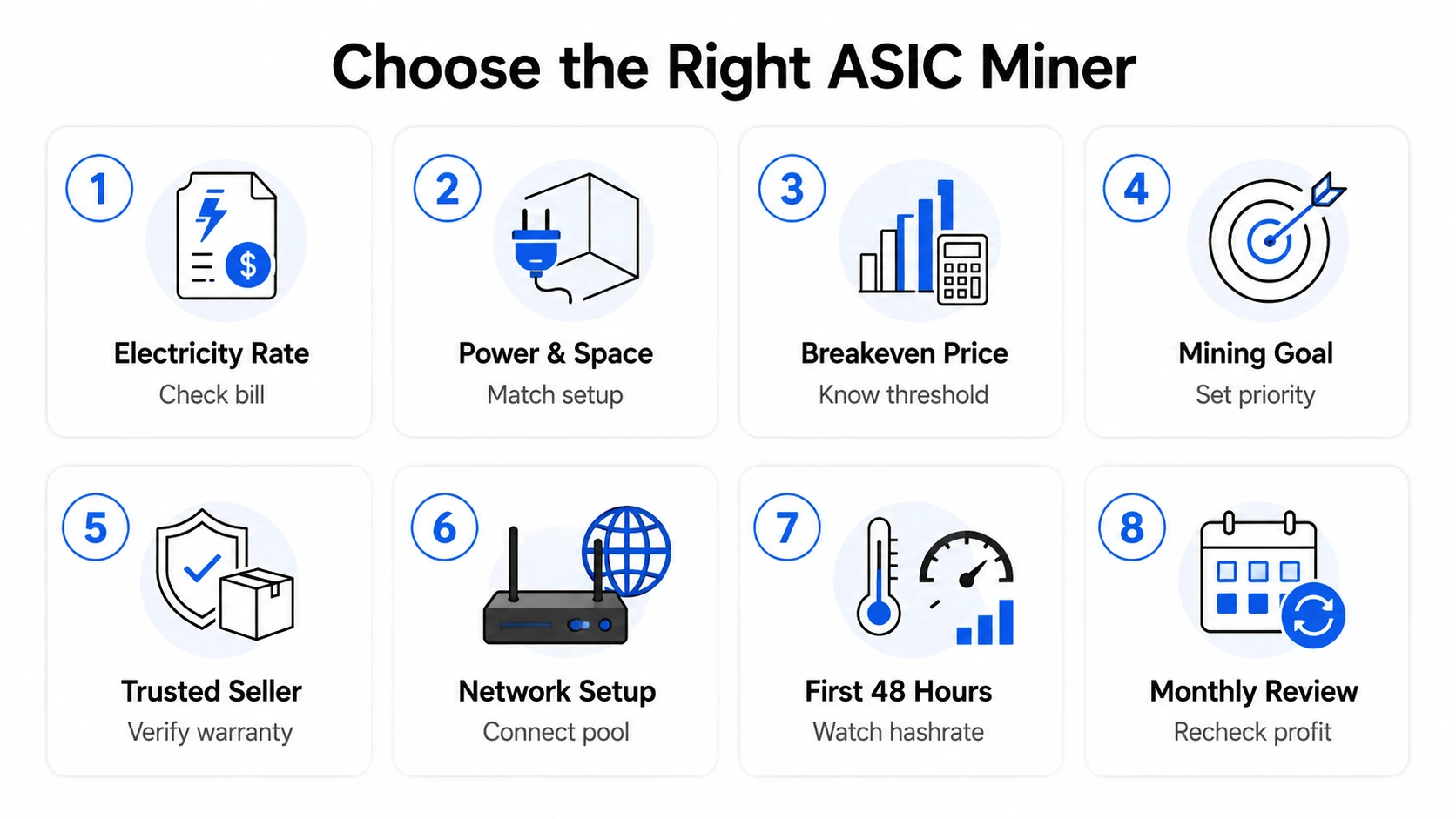
Before you buy anything, walk through this checklist. It takes ten minutes and can save you from an expensive mistake.
- Find your real electricity rate. Check your last utility bill for the actual price per kWh, not an estimate. This single number changes, which machine makes sense more than any spec on a product page?
- Decide on your power and space constraints. A 220–277V industrial machine like the A16 XP or A16 needs proper electrical infrastructure and a space that can handle heat and noise. A 110–240V home unit like the Avalon Q or Mini 3 can usually work in a garage or spare room.
- Calculate the breakeven hash price. Divide your electricity cost per TH/s per day by the current revenue per TH/s per day (roughly $0.033 at today’s price and difficulty). If your cost is higher than revenue, that machine loses money for you specifically, regardless of what it earns on paper elsewhere.
- Match the machine to your goal. If you want maximum monthly income, prioritize the A16 XP or A16. If you want a low-risk way to learn mining, start with the Avalon Q, Mini 3, or Nano 3S.
- Order through a trusted seller. Confirm the listing includes a PSU, check the warranty terms (Avalon machines typically carry 180–365 day manufacturer coverage), and confirm shipping timelines before paying.
- Set up networking and mining software. Once your machine arrives, connect it via Ethernet, assign it a static IP if possible, and point it at a mining pool using your pool credentials. Most Avalon units have a simple web-based configuration page for this.
- Monitor temperature and hashrate for the first 48 hours. New units sometimes need a firmware update or a quick fan adjustment. Confirm the reported hashrate matches the spec sheet before assuming everything’s running correctly.
- Recalculate profitability monthly. Bitcoin prices and network difficulty change often, so a machine that is profitable today may earn less next month, or become more profitable when market conditions improve. Review performance regularly instead of leaving the setup unchecked. You can use tools such as WhatToMine to estimate revenue, electricity costs, and potential profitability.
What Cooling Do You Need When Running Multiple Canaan Avalon Miners?
If you’re running the A16 XP or A16 at any real scale, standard air cooling eventually hits its limits, especially in a warm climate or a tightly packed room with multiple units. A few options worth knowing about as you scale up:
- Hydro cooling runs a closed liquid loop through the miner’s heat sinks, pulling heat away faster than air alone and letting you run machines slightly harder without throttling.
- Immersion cooling submerges the entire board in a non-conductive fluid, which can dramatically cut noise and extend hardware life, though it requires more upfront setup work and specialized equipment.
- Simple airflow planning still works fine for one or two units. Just make sure intake and exhaust paths don’t overlap, or you’ll end up recirculating hot air back into the machine.
For the smaller home units in this lineup, the Avalon Q, Mini 3, and Nano 3S, none of this is necessary. A room with decent ventilation and maybe a small fan pointed at the unit is more than enough. Save the advanced cooling investment for when you’re running multiple flagship-class machines and the heat output actually justifies it.
How Do You Maximize Profits from a Canaan Avalon Miner?
A few practical lessons that apply across every machine on this list:
- Don’t ignore cooling. Heat is the enemy of both hashrate stability and hardware lifespan. Even home units benefit from a fan pointed at them or a spot with decent airflow.
- Join a pool with low fees. Solo mining any of these machines, except perhaps as a hobby, isn’t realistic given the current network difficulty. A pool with a 1–2% fee is standard and worth it for consistent payouts.
- Track your breakeven point, not just your revenue. A smart crypto miner always checks the breakeven electricity rate before buying new hardware, because revenue numbers alone can be misleading without that context.
- Consider buying during difficulty drops. Difficulty just fell over 10%, which temporarily boosts earnings per TH/s for everyone still running hardware. Buying right after a drop, rather than right before one, can improve your early returns.
- Don’t ignore resale value. Flagship machines like the A16 XP tend to hold value better over time than entry-level units, simply because their hashrate stays competitive longer as network difficulty rises.
- Factor in noise and space realistically. A 65 dB machine in a small apartment will cause problems. Be honest about where the unit will actually live before you buy it.
Conclusion
There’s no single “best” Canaan Avalon miner in 2026, only the best one for your specific situation. The Avalon A16 XP earns the top spot for anyone serious about maximizing output and running an actual mining business, with the Avalon A16 right behind it as a slightly more budget-friendly flagship option. The Avalon Q hits a genuinely smart middle ground for buyers who want real output without industrial-scale power needs. The Mini 3 and Nano 3S serve a different purpose entirely, getting your foot in the door of Bitcoin mining without a large financial commitment, even if their profit margins are thin in today’s market.
Whatever your budget and goals, Asicmarketplace carries all five of these models with PSUs included, fast global shipping, and manufacturer warranty coverage on every unit. Compare your electricity rate against the numbers in this guide, pick the model that actually fits your setup, and you’ll be mining with realistic expectations instead of guesswork.
Frequently Asked Questions
-
Is Canaan Avalon as good as Bitmain Antminer for mining Bitcoin?
Canaan Avalon machines run the same SHA-256 algorithm and compete directly on hashrate and efficiency with comparable Antminer models. The right choice usually comes down to price, availability, and your specific power setup rather than one brand being universally better.
-
Which Avalon model is best for someone just starting out?
The Avalon Q offers the best balance of approachable pricing and meaningful hashrate for a first-time buyer. The Nano 3S and Mini 3 are even cheaper but should be treated as learning tools rather than serious income sources right now.
-
How long do these miners typically last?
Lifespan mostly comes down to operating temperature, cooling, and power quality rather than a fixed expiration date. Units kept cool and run on clean, stable power commonly stay productive for several years, while units exposed to heat and dust wear out faster.
-
Do I need special wiring for the A16 XP or A16?
Yes. Both machines require a 220–277V circuit, which is standard in industrial mining setups but not typical household wiring in most countries. Plan for proper electrical infrastructure before ordering either model.
-
Will mining profitability improve later in 2026?
It’s impossible to predict with certainty, but two factors could help: Bitcoin price recovery and continued difficulty drops as inefficient hardware exits the network. Neither is guaranteed, so buy based on today’s numbers, not a hoped-for future.

Peter Davis
Peter Davis is an accomplished blockchain analyst and technical writer with over four years of experience in the cryptocurrency sector. His expertise spans blockchain infrastructure, ASIC mining hardware, and digital asset markets, where he is recognized for translating complex technical concepts into precise, insightful, and accessible analysis for a global audience.
With a strong foundation in technical research and market evaluation, Peter’s work focuses on bridging blockchain innovation with practical mining and investment strategies. His writing is defined by analytical depth, clarity, and a focus on data-backed insights that guide both professionals and enthusiasts through the evolving crypto landscape.
Driven by a deep passion for Web3 technology and decentralized systems, Peter continues to produce authoritative, research-driven content that enhances understanding of ASIC mining performance, blockchain efficiency, and the broader dynamics shaping the future of digital finance